

The same data is entered repeatedly
Sales, administration and operations duplicate entries and later have to reconcile differences.
Connected systems
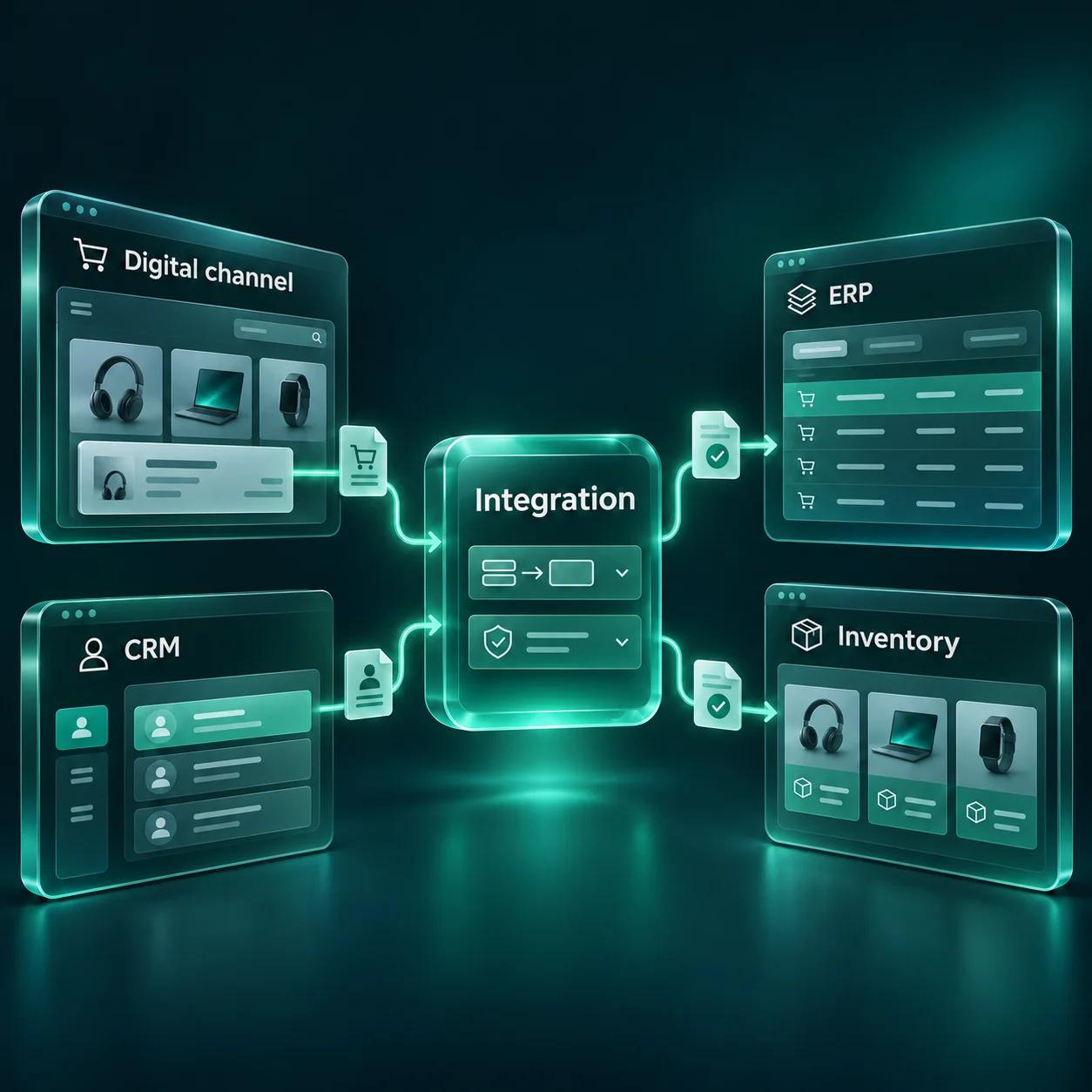
We connect applications, platforms and data sources so information reaches the people and processes that need it. Each integration is designed around your operation, from commercial tools to existing enterprise systems.
The underlying problem
When each team sees a different version, checking and moving data becomes more work. Integration defines how information is shared; it also requires attention to data quality, ownership and rules.
Fragmented information
Sales, administration and operations duplicate entries and later have to reconcile differences.
Information is exported, corrected and imported to obtain a view that soon becomes outdated again.
An order can move forward in one platform without another team receiving the change or its context.
Without a defined source and exchange, making decisions from consistent information becomes difficult.
Defined exchange
We agree which system maintains each piece of information and when it should communicate a change.
Fields are mapped, validated and sent through mechanisms suited to the platforms.
Confirmations, statuses and errors help reveal what was processed and what needs attention.
A connection cannot fix incomplete or contradictory records by itself; we define how to handle them.
What we can connect
We begin with the information that needs to move, not a fixed list of technologies. The actual route depends on each platform’s capabilities, permissions and limits.
When a contact or opportunity is isolated, teams have to reconstruct its history before acting. Connecting requests, customers and statuses can preserve commercial context.
A website request could reach the CRM with its source and context.
Orders, products, stock and movements need shared criteria across teams. We define which system originates each data set and how its status is communicated.
A confirmed order may send lines and quantities to an administrative system.
A digital sale does not end at the store. Exchange can connect catalog, orders, authorized payment states and internal operations without repeated entry.
An accepted order can inform inventory and leave a confirmation for follow-up.
We can assess authorized connections with external platforms to share statuses and references while respecting each service’s requirements and responsibilities.
An authorized payment status could update the order reference.
Branches and operating units produce data that may need consistent consolidation for operational follow-up and reporting.
Each branch can send validated movements to a central operational view.
An older application may not expose a modern API. We assess available mechanisms and, when safe and feasible, design adapters or intermediate services.
A structured file can help exchange records with an existing system.
Anatomy of an integration
This diagram follows one direction of exchange. The routes, confirmations and timing of each integration depend on the systems and data involved.
A system produces an event, record or file and identifies what information it can share.
An API, event, batch or other authorized channel carries the data with the necessary context.
Fields, permissions and rules are checked; data is converted to the format expected by the destination.
The receiving system processes the operation according to its capabilities and returns an outcome when possible.
We record what happened, what remains pending and who should act when something fails.
Technical decisions with purpose
Platforms expose different mechanisms, and not every operation needs an immediate response. We choose the connection for operational fit and long-term maintainability.
Useful when a platform exposes documented, authorized operations to query or send data.
Allow a system to react to changes published by another platform when reliable, verifiable events are available.
Works for periodic updates or batches when the business does not require immediate exchange.
Can provide controlled exchange with older systems lacking suitable APIs, with validation and reconciliation.
Mediate where formats, rules or responsibilities should not be coupled directly.
Helps decouple processes and handle different processing times when volume and operations justify it.
Reliable integrations
A connection needs verifiable rules, not only technical access.
A useful integration must be reviewable and recoverable when conditions change.
Possible scenarios
Three common situations show how information could move between systems. Scope depends on each platform’s access, rules and capabilities.
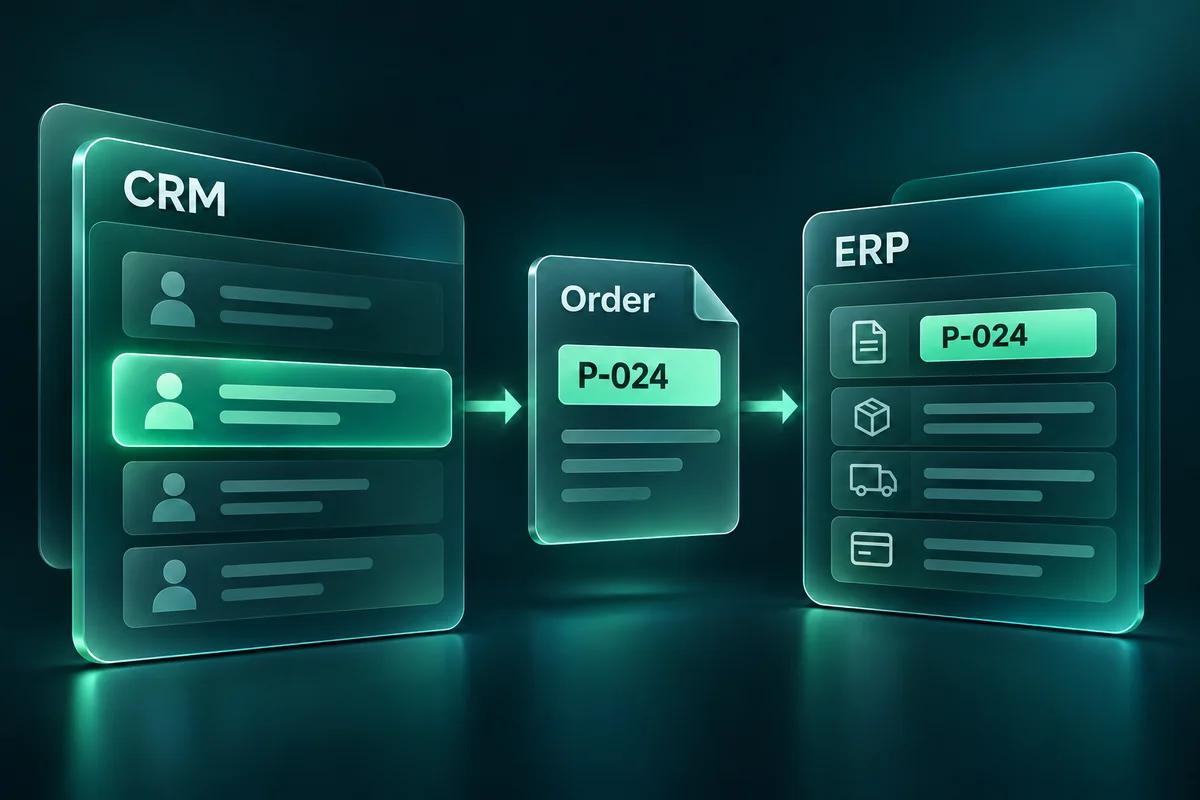
The goal is to preserve context when an opportunity becomes an order that needs to reach administrative operations.
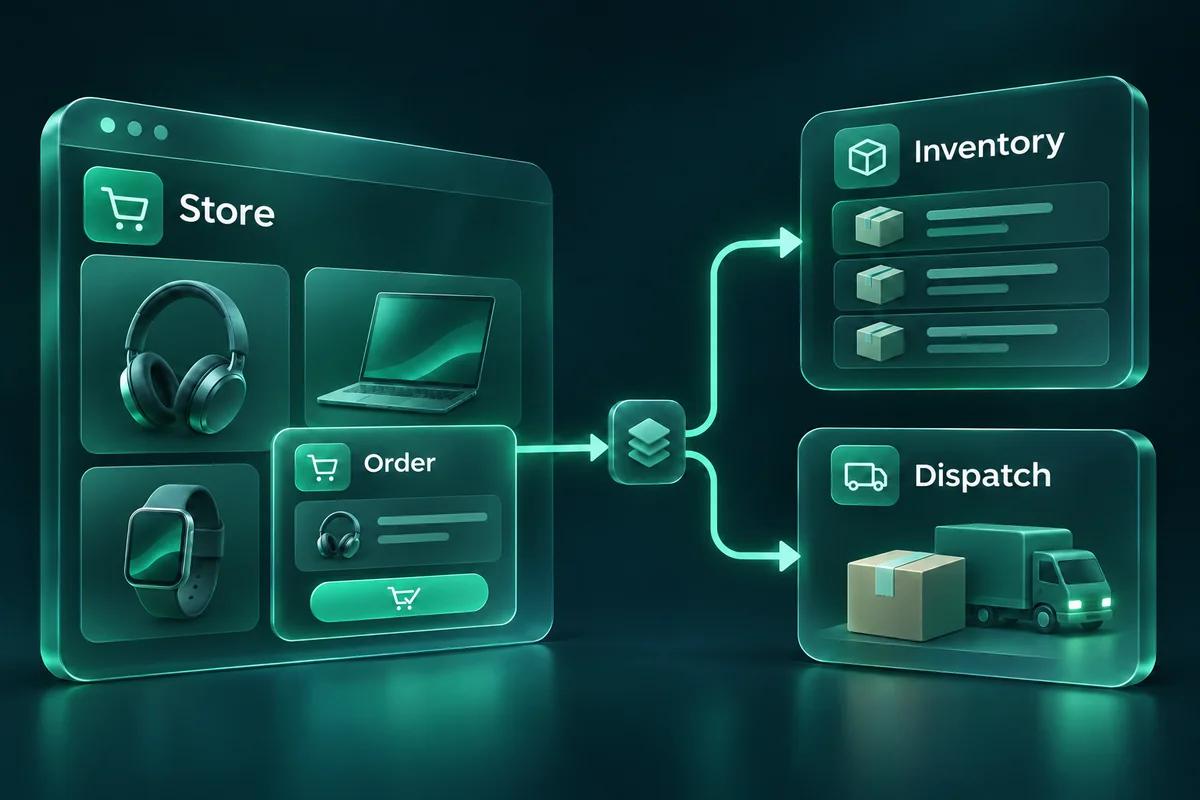
The goal is to handle a digital order without manually reconstructing inventory, invoicing or dispatch.
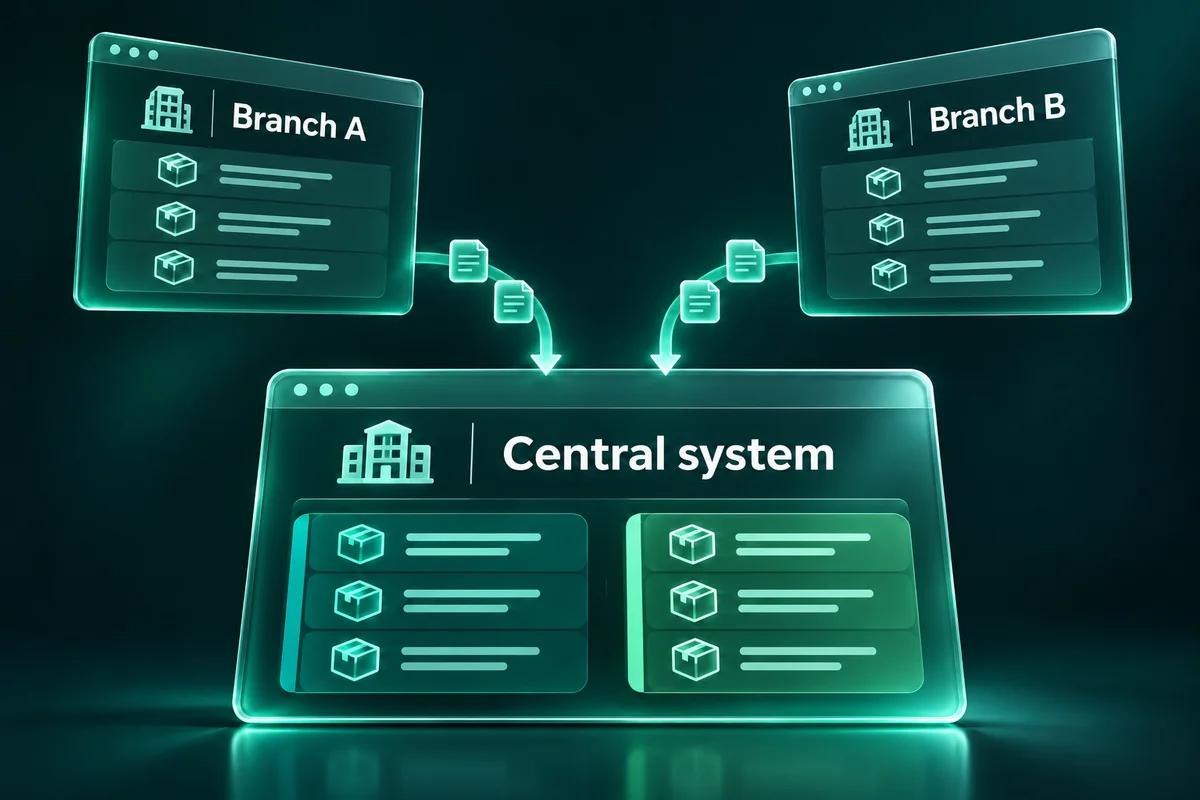
The goal is a comparable view of activity across branches for operational follow-up.
How we approach an integration
We work with business and technology owners. Together we establish what must travel, why, how often and what happens when it does not arrive as expected.
Identify systems, data owners, responsible people and the operational problem.
Check APIs, events, files, permissions, limits and provider restrictions.
Define direction, mapping, validation, confirmation, failures and data protection.
Implement adapters and verify normal cases, incomplete data and recoverable failures.
Compare the flow with real operations and agree on follow-up as platforms change.
Frequently asked questions
Yes, when the platforms offer compatible, authorized mechanisms that support the required data. We review contracts, permissions and limits before defining the solution.
We can assess structured files, exports or other permitted mechanisms. If there is no safe, maintainable path, we explain the limitation and consider alternatives.
Not necessarily. Integration aims to make use of existing tools when they serve their purpose and allow a viable connection. Replacement is considered only if limitations prevent the goal.
It may be possible through events, APIs or scheduled exchange. Frequency and direction depend on the systems, data rules and consistency your operation requires.
We define least-privilege permissions, credential handling, validation, transport and records appropriate to the case. We also review each provider’s capabilities and responsibilities.
The number of systems, quality of their interfaces and data, business rules, permissions, volumes, failure handling and necessary tests all matter. Scope is defined after those conditions are reviewed.
Let’s talk
Tell us which systems you use, what information needs to move and what problem the disconnect causes today. We will start by assessing realistic options.